

Sanchez i Picanyol and Others v. Spain, Nos. 25608/20, 27250/20 and 46481/20, ECtHR (Fifth Section), 6 November 2025
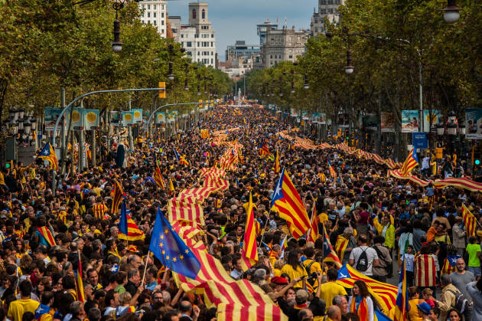
The judgment in Sànchez i Picanyol and Others v. Spain arises from the 2017 Catalan constitutional crisis, which stemmed from the attempt by the Catalan institutions to pursue a process of secession from Spain through the referendum held on 1 October 2017, which was declared unlawful and unconstitutional by the Spanish authorities.
The applicants, Jordi Sànchez, Jordi Turull and Oriol Junqueras, were leading figures in the Catalan independence movement and held important political or associative posts. Following the events preceding and accompanying the referendum – in particular the demonstrations on 20 and 21 September 2017 aimed at obstructing the activities of the judicial authorities – they were placed in pre-trial detention as part of criminal proceedings concerning offences against the constitutional order.
Whilst in pre-trial detention, the applicants stood in the Catalan regional elections of December 2017 and were elected to the Parliament of Catalonia. However, the national courts rejected several requests for temporary release aimed at enabling them to participate in parliamentary activities and in the procedures for the investiture of the President of the Generalitat. Subsequently, once the indictment had been formally issued, they were suspended from the public offices they held.
Before the ECHR, the applicants argued that these measures had compromised their right to stand for election and the free exercise of their parliamentary mandate, and also constituted an instrumental use of pre-trial detention for political purposes.
The case was examined primarily in the light of Article 3 of Protocol No. 1 to the ECHR, which protects the right to free elections and guarantees not only the right to vote, but also the right to stand for election and to exercise the representative mandate obtained through the popular vote.
The Court reiterated a well-established principle of its case law: electoral rights are not absolute, and States enjoy a wide margin of appreciation in regulating the conditions for the exercise of the right to stand for election and the right to vote, provided that the restrictions pursue a legitimate aim and are proportionate. Applying these criteria to the specific case, the Court held that the applicants’ pre-trial detention was based on genuine and sufficiently justified procedural requirements, linked to the risk of absconding and of a repetition of the alleged offences. The judicial authorities had also assessed the impact of the measures on the political rights of those concerned, adopting solutions aimed at limiting their effects, such as the possibility of voting by proxy.
Of particular significance was the fact that the applicants had not been excluded from the electoral contest: they had been able to stand as candidates, conduct their election campaign and be elected. The restrictions concerned solely the subsequent exercise of parliamentary functions and were based on precautionary requirements deemed compatible with the Convention.
The Court also ruled out a violation of Article 18 of the ECHR, noting that there was insufficient evidence to demonstrate that the detention pursued aims other than those formally stated. The objective of preserving the constitutional order and ensuring the proper conduct of the criminal proceedings could not be characterised as a hidden political aim.
Finally, with regard to Article 5 of the ECHR, the Court held that the pre-trial detention had been ordered and maintained in accordance with the Convention’s safeguards, on the basis of relevant and non-arbitrary grounds.
The decision follows the ECHR’s traditional approach to electoral matters, characterised by a pragmatic and deferential stance towards the assessments made by national authorities. Ever since the landmark judgment Mathieu-Mohin and Clerfayt v. Belgium, the Court has made it clear that Article 3 of Protocol No. 1 does not guarantee absolute electoral rights, but allows States to impose restrictions provided that they do not undermine the substance of the right and respect the principle of proportionality.
In the case in question, the Court appears to place particular emphasis on the substantive fact that the democratic process had not been neutralised: the applicants had taken part in the elections, had been elected, and the pro-independence parties had continued to operate freely within the Spanish political system. From this perspective, the contested restrictions did not appear likely to undermine political pluralism, which represents one of the fundamental values of the Convention.
The judgment also follows the line of case law which recognises that States have a particularly wide margin of appreciation when restrictions on political rights form part of criminal proceedings aimed at safeguarding the democratic constitutional order. In this context, the Court tends to exercise limited scrutiny, verifying above all the absence of arbitrariness and the existence of adequate reasoning.
From a critical perspective, however, the judgment highlights a structural tension between two equally important requirements: on the one hand, the protection of the constitutional order and the rule of law; on the other, the need to ensure the full effectiveness of the democratic representation expressed by the electorate. The Court’s decision clearly gives priority to the first requirement, holding that the safeguarding of democratic institutions may justify significant restrictions on the exercise of a parliamentary mandate where these are closely linked to a criminal proceeding lawfully instituted.
Ultimately, the judgment confirms the approach that the right to stand for election and the representative mandate enjoy particularly strong protection under the Convention, but do not automatically take precedence over the requirements of criminal justice and the protection of the democratic order. The Court’s review remains focused on verifying the proportionality of the measure and the absence of abusive political motives, elements which, in the present case, were found to exist in favour of the respondent State.
(Comment by Edin Skrebo)