

Rădulescu Dobrogea and Ciurea v. Romania, Nos. 63972/19 and 16056/20), ECtHR (Fourth Section), 16 July 2026
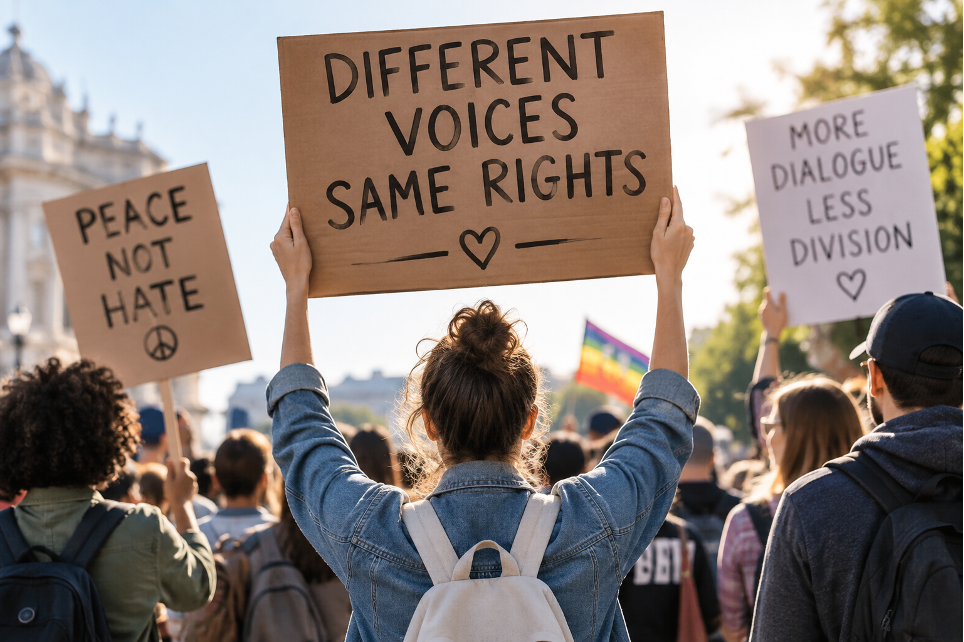
In Rădulescu Dobrogea and Ciurea v. Romania, the European Court of Human Rights examined whether the fines imposed on participants in a peaceful counter-demonstration violated the applicants’ freedom of assembly, as protected by Article 11 of the Convention.
In March 2018, the applicants took part in a protest in Bucharest: while a political party was holding a congress, they criticised the party itself and its leaders. The protest took place close to the congress but outside the venue. It remained peaceful, and there was no violence. The applicants were nonetheless fined under domestic Romanian legislation prohibiting participation in a counter-demonstration taking place at the same time and location as a previously notified public assembly.
The Strasbourg Court accepted that the fines had a legal basis and pursued legitimate aims, namely preventing disorder and protecting those attending the other assembly. However, the Court found that the domestic court had not sufficiently examined the circumstances of the case. The Court emphasised the political nature of the protest and the fact that it concerned matters of public interest. In these circumstances, freedom of expression and peaceful assembly require particularly strong protection.
The Court therefore found a violation of Article 11 of the Convention, read in the light of Article 10. The authorities should have carried out a concrete and genuine proportionality assessment, considering the actual disturbance caused, the competing rights at stake, and whether less restrictive measures could have allowed both assemblies to take place peacefully.
(Comment by Tania Pagotto)